
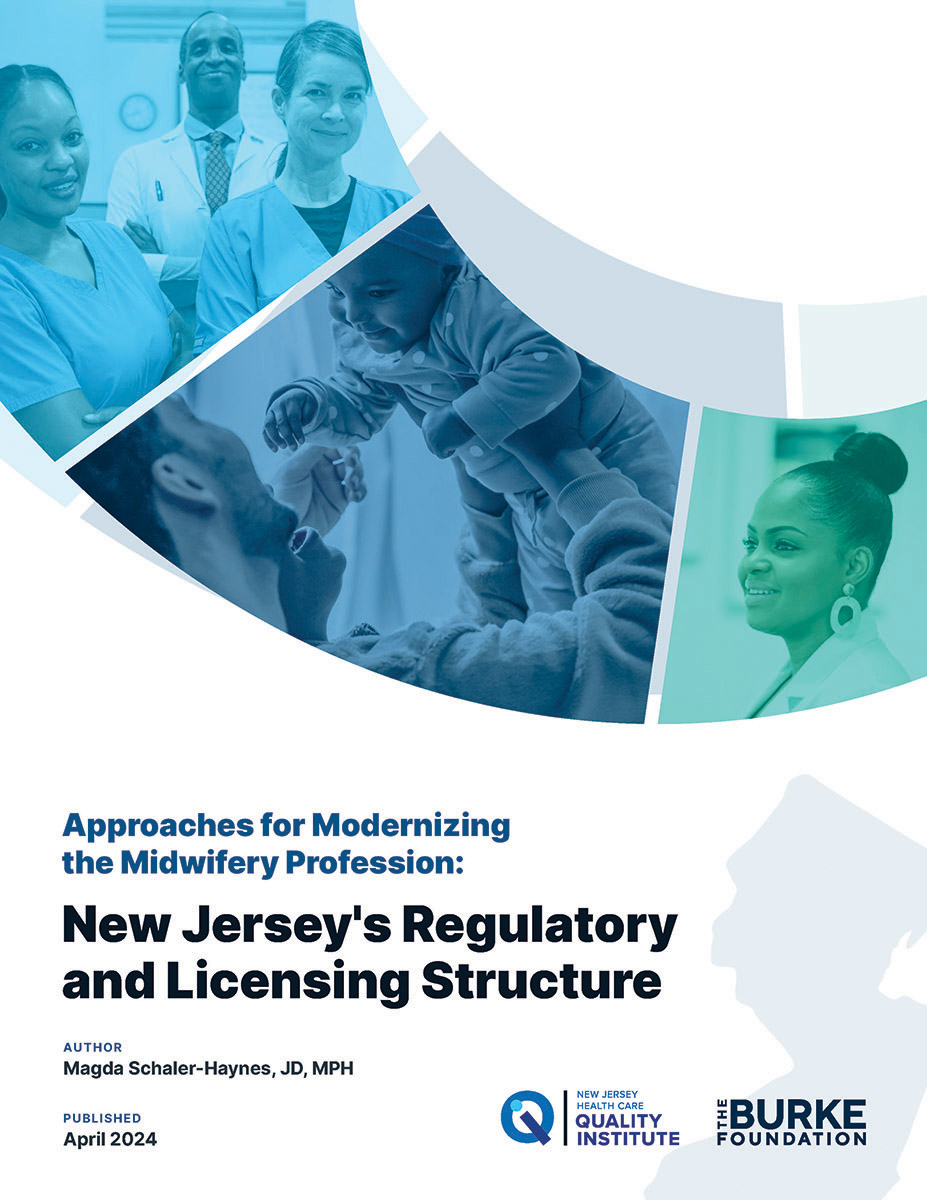
From the Report
Midwife-led births are associated with higher rates of breastfeeding and patient satisfaction and reduced unnecessary C-sections, hospital stays, and risk of preterm births.
Due to heavy regulation of midwifery, the United States has only 4 midwives per 1,000 births, compared to other OECD nations, that have up to 68 midwives per 1,000 live births.
Benefits of modernized midwifery licensing and regulation include increased access to midwifery care, an increased midwifery workforce, and reduced costs for the healthcare system.
Report Summary
A 2024 report from the Burke Foundation, in partnership with the New Jersey Health Care Quality Institute, outlines concrete steps to modernize New Jersey’s century-old laws that govern the midwifery profession. This report builds on earlier findings and calls for reforms that would allow midwives to practice to the full extent of their training, and expand access to high-quality care.
Midwives are licensed and credentialed healthcare providers who deliver safe, evidence-based care throughout pregnancy and childbirth. Yet New Jersey’s current regulations — including physician supervision requirements and limits on prescriptive authority — restrict their practice, and reduce access to care.
The report recommends establishing an independent midwifery board, granting full practice authority, ensuring fair reimbursement, and expanding education and training opportunities to grow and diversify the workforce.
Modernizing midwifery regulation would help close racial disparities, lower costs, and make New Jersey’s maternal health system stronger and more equitable for all families.
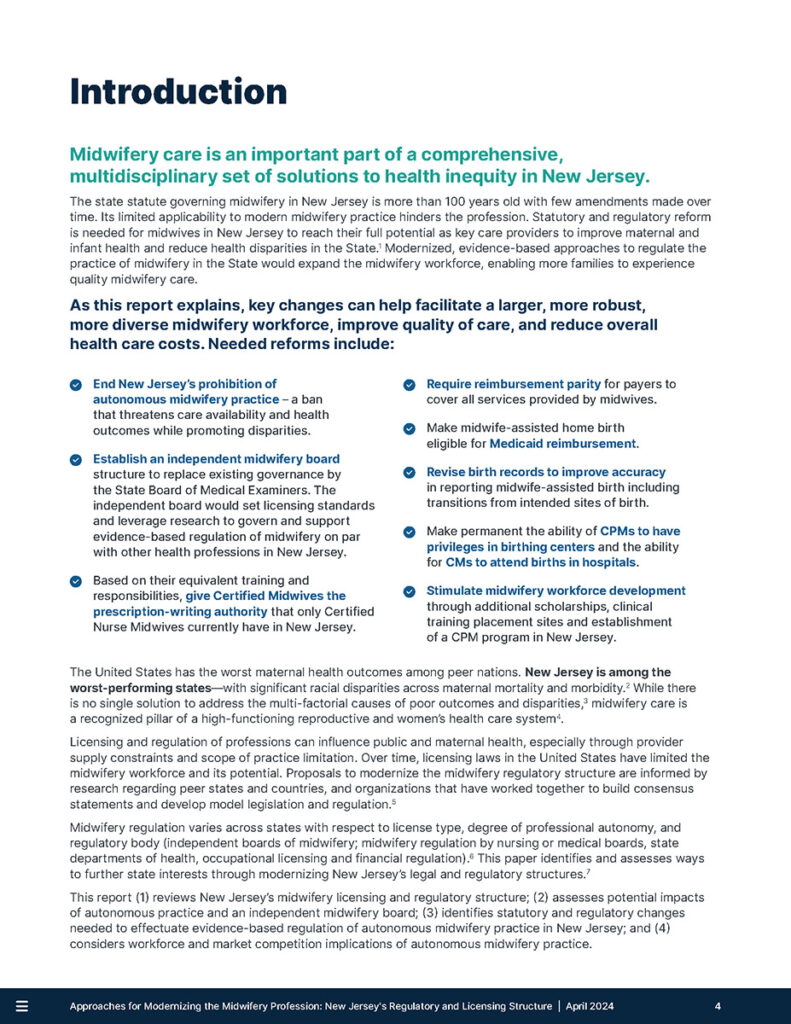
Key Reforms Recommended:
End New Jersey’s prohibition of autonomous midwifery practice – a ban that threatens care availability and health outcomes while promoting disparities.
Establish an independent midwifery board structure to replace existing governance by the State Board of Medical Examiners. The independent board would set licensing standards and leverage research to govern and support evidence-based regulation of midwifery on par with other health professions in New Jersey.
Based on their equivalent training and responsibilities, give Certified Midwives the prescription-writing authority that only Certified Nurse Midwives currently have in New Jersey.
Require reimbursement parity for payers to cover all services provided by midwives.
Make midwife-assisted home birth eligible for Medicaid reimbursement.
Revise birth records to improve accuracy in reporting midwife-assisted birth including transitions from intended sites of birth.
Make permanent the ability of CPMs to have privileges in birthing centers and the ability for CMs to attend births in hospitals.
Stimulate midwifery workforce development through additional scholarships, clinical training placement sites and establishment of a CPM program in New Jersey.