Healthy Pregnancies and Strong BeginningsTransforming Pediatric Care
Centering
Relationship-based group care to improve health of mothers, babies, and families
–
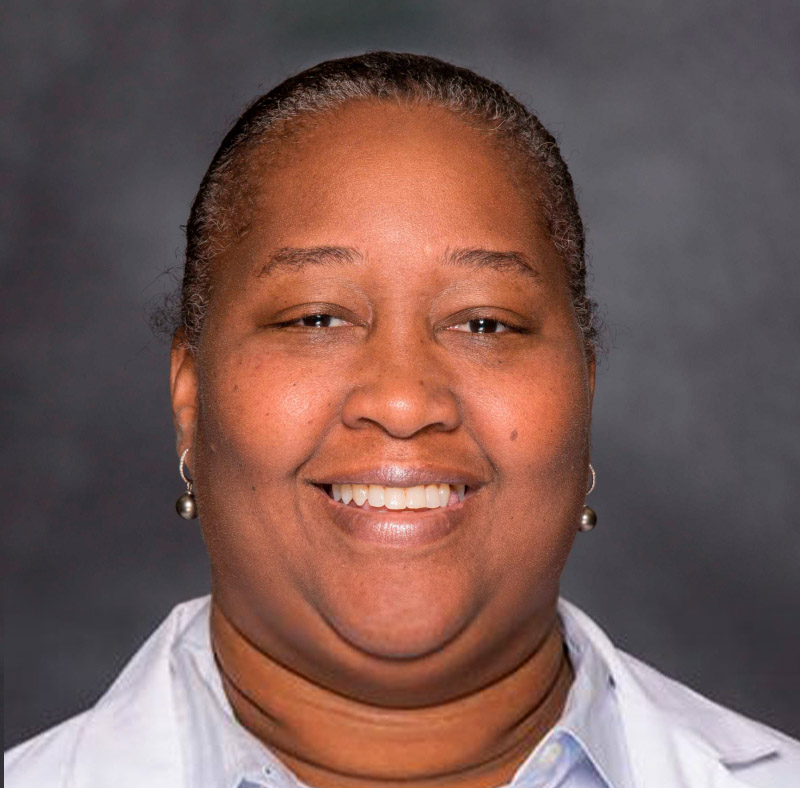
“Within a group model like CenteringPregnancy, caregivers are experts. They ask questions and answer each other’s questions.”
— Dr. Damali Campbell, OB-GYN and Centering physician champion University Hospital, Newark, NJ; associate professor, Robert Wood Johnson Medical School
CenteringPregnancy and CenteringParenting involve a new approach to group primary prenatal and pediatric care visits that improves health and reduces health disparities for participating families.
These innovative models of relationship-centered care — which count as billable healthcare encounters — help reduce healthcare costs, decrease provider burnout, and enhance patients’ care experience.
The Centering model was pioneered by nurse-midwife Sharon Schindler Rising, MSN, CNM, FACNM, who later formed the nonprofit Centering Healthcare Institute, now the national leader in group-based healthcare.
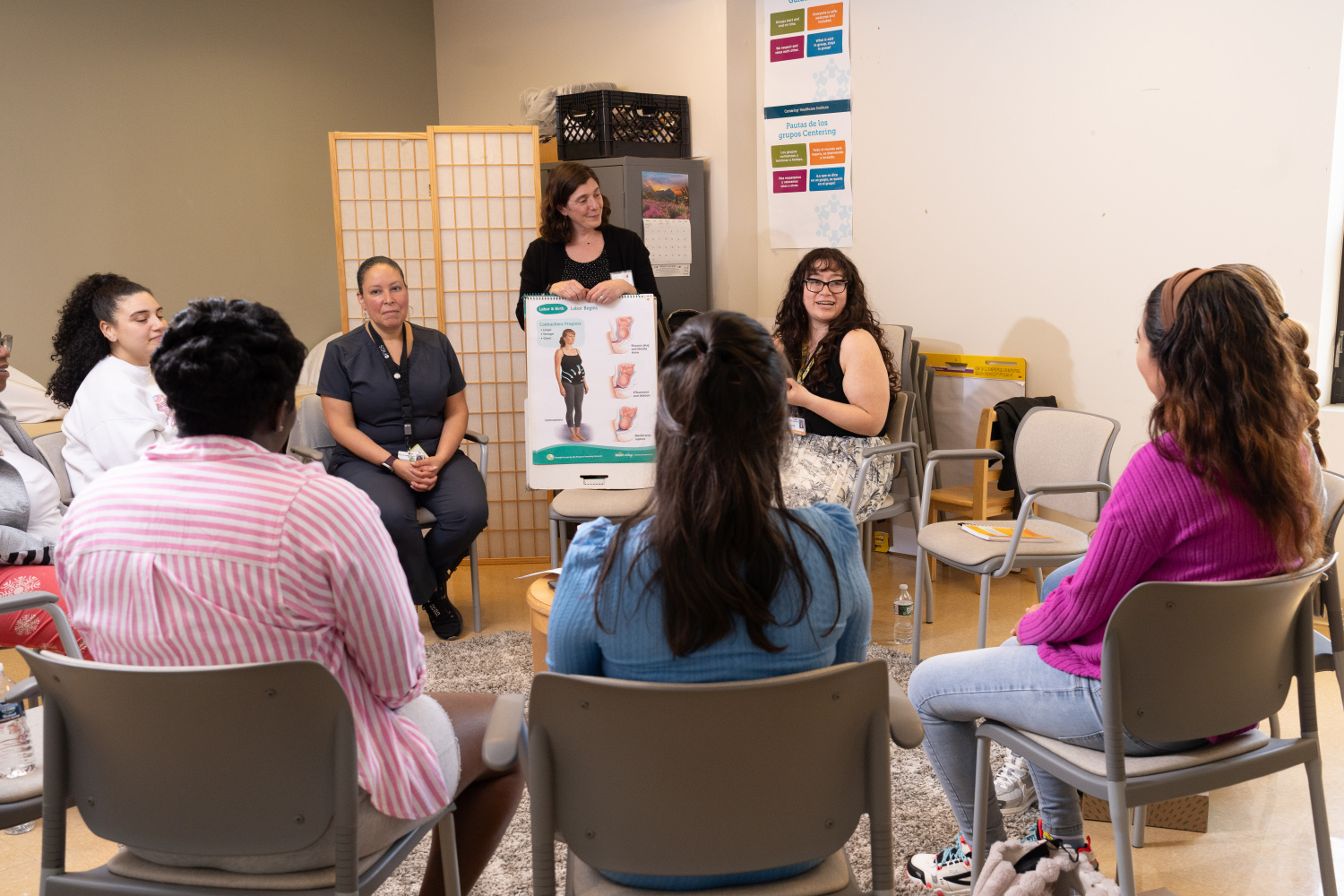
CenteringPregnancy brings together 8-12 expectant mothers for prenatal care and CenteringParenting gathers six to eight families and their babies during well-child visits up to age two. These 1.5- to-2-hour group sessions include the individual health assessments one would expect at a doctor’s visit plus facilitated group discussion among patients and providers on such topics as stress management, signs of early labor, breastfeeding, safe sleep, and infant cues.
Beyond spending more time with their provider compared to a typical 15-minute visit, patients build a community of learning and support with peers who share advice and guidance. Guest speakers can supplement the group sessions by providing information on such useful topics as nutrition and breastfeeding, meditation for stress management, and community resources to address such non-medical influences on health as housing and transportation.
The benefits
CenteringPregnancy reduces the risk of a NICU stay by 28%.
CenteringPregnancy reduces the risk of preterm births by 38%.
Black women are significantly less likely to have preterm births in CenteringPregnancy (10%) compared to traditional prenatal care (15.8%).
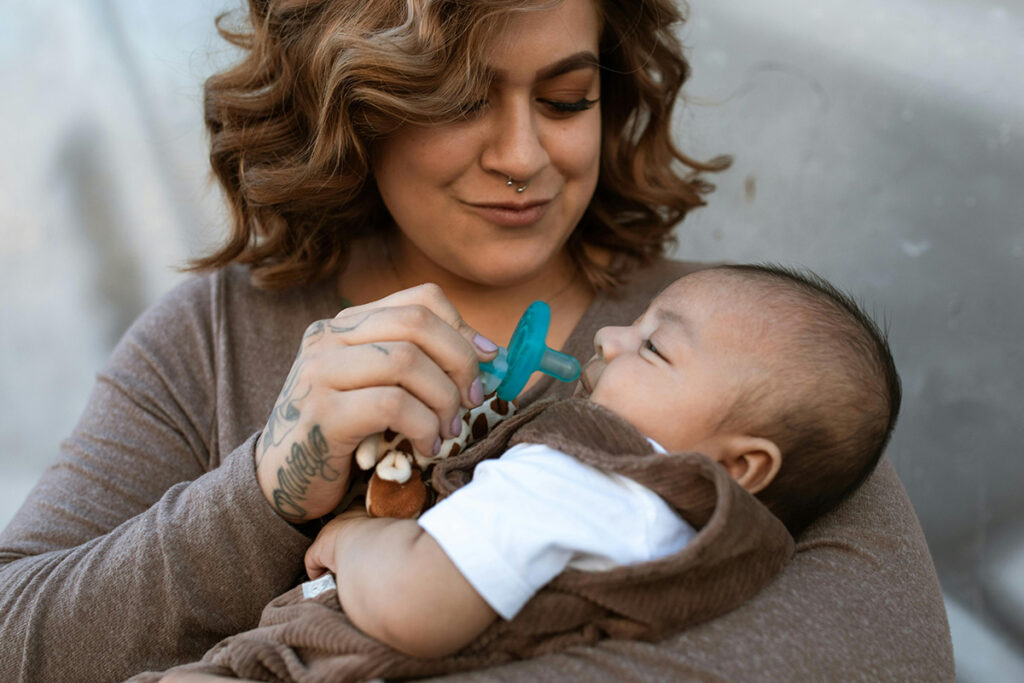
Young children in CenteringParenting are more likely to be up to date with their scheduled visits and vaccines than those receiving the traditional model of well-child care.
Mothers whose children received pediatric care through CenteringParenting are more likely to be screened for depression.
Encouraging results
The Burke Foundation joined the New Jersey Department of Health, The Henry and Marilyn Taub Foundation, and The Nicholson Foundation to invest in a five-site Centering pilot in 2019-2021. Despite launching groups during the disruption wrought by the COVID-19 pandemic, the sites served 153 families during a one-year implementation phase and had such encouraging results as:
30.3%
fewer preterm births
26.2%
fewer low birth weight newborns
8.9%
higher breastfeeding rate at hospital discharge
40%
more young children up-to-date on immunizations
What’s Next?
Inspired by the five-site pilot’s promising results, the Burke Foundation has funded 25 Centering sites in New Jersey. Centering Healthcare Institute and the New Jersey Health Care Quality Institute are supporting high-quality implementation and advancing strategies to strengthen operational and financial sustainability of group-based healthcare for generations to come.
In support of this initiative, the Rutgers School of Public Health is leading an evaluation of CenteringPregnancy. The project includes trained community researchers as part of the study team — women of color with prenatal care and birthing experiences in New Jersey — who informed the survey and discussion guide for Centering participants. The evaluation is also assessing the extent to which Centering improves participants’ healthcare experience and builds trust in their providers.
This targeted support strategy is now shaping the Centering Healthcare Institute’s three-year strategic approach across five priority states — New Jersey, California, Michigan, Ohio, and Texas — backed by $7.6 million from Blue Meridian Partners plus $5 million in unrestricted grant funding from Bezos Family Foundation.