
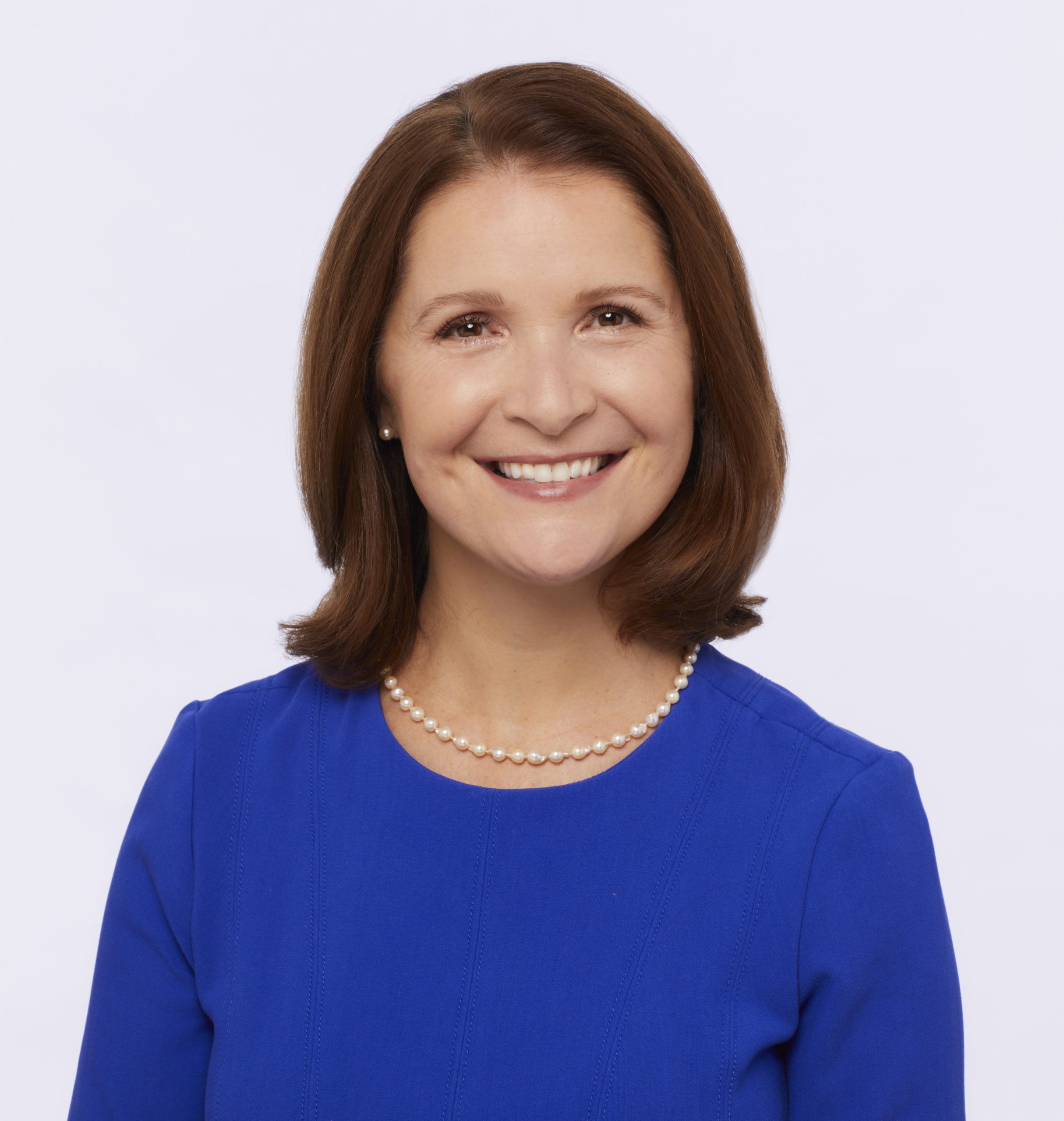
Interview with Rahil Briggs
Dr. Rahil D. Briggs, national director of HealthySteps, leads one of the nation’s fastest-growing, evidence-based approaches to early childhood health. A clinical psychologist and professor at the Albert Einstein College of Medicine, her career bridges pediatric care and child development.
In this conversation, Dr. Briggs shares how HealthySteps helps families be seen more fully, what’s next for New Jersey’s scale-up, and why the earliest relationships are the strongest medicine of all.
At its core, HealthySteps is about relationships. How does bringing a Specialist focused on child development and behavioral health into the pediatric team change what care looks and feels like for families and providers?
You can’t get much done without relationships, right?
Pediatricians have 15 minutes for a well-child visit, during which they’re asked to do everything under the sun, and more. They’re focused primarily on the physical health aspects and the anticipatory guidance that’s recommended. To really get down to the early relational health between the baby and the family sometimes takes a little longer.
If it was easy and there was an instruction manual, that would be a different case. But families are unique, living in unique circumstances. We need to spend the time to actually develop the trusting relationship, hear what families are struggling with and want to focus on, and partner with them in a way that feels authentic and meaningful.
What we hear most often from pediatricians is how grateful they are that there’s another team member to care for this family and to maybe spend half an hour or 45 minutes actually talking about why the sleep training isn’t working.
Pediatricians and family medicine doctors will say, “I’m glad I have a partner in this, that I’m not alone, that there’s someone who can manage these pieces of it.”
Providing a full care team and practicing team-based care means that critical vital sign — the relationship — can be attended to.
Being a parent of a young child is often extremely isolating, especially in our country. And one of the most common things we hear from families who have benefitted from this program is some version of, “With HealthySteps, I’m not alone,” “With Healthy Steps, I had a partner,” or, “With Healthy Steps, I had help.” The idea that even though you’ve got hundreds of HealthySteps Specialists across the country and they’re all different with potentially different backgrounds and different trainings, that they’re able to have that partnership with families is fantastic. We developed the HS Specialist Competencies to help create a shared infrastructure for the skills, knowledge and disposition of HealthySteps Specialists around the country, and it’s available to all on our website.
HealthySteps is often called a “no-brainer” because it reaches families earlier and fills a gap in pediatric care. Why is prevention through pediatrics such a smart investment — for families, providers, and the healthcare system?
Prevention is a good idea always, whether it’s through pediatrics or through some other system. To paraphrase Frederick Douglass, it’s easier to build strong humans than to fix them later on.
Prevention in pediatrics becomes a no-brainer because that’s the one system where most babies, toddlers, and their families show up. It’s all we’ve got. For school-aged kids, you can focus on the K through 12 system and you’ll find most of them. But for babies and toddlers, it’s the pediatric system.
Upwards of 90% of families go to the pediatrician’s office. It’s a relatively non-stigmatized, and even positively stigmatized, space and there are repeated visits, 12 to 13 in the first 3 years of life alone and 7 in the first year of life. It’s this amazing platform to practice primary prevention at a population health level.
And babies don’t go to the doctor by themselves. The ability to not just reach the baby, but also reach the mother, father, or primary caregiver — it’s hugely important.
That’s a key piece of the smart investment. It’s a no-brainer to people that, “Oh, if we prevent mental health and developmental challenges for children, that’s a good idea.” It’s better for children, but it also saves us money. What might not be as top of mind for folks is that some of those new parents are the ones least likely to get preventive care themselves, because there are a few other things to focus on, to say the least. But they do prioritize their baby’s well visit. So if you’re practicing team-based care in a way that treats the whole family as the patient, and can attend to both prevention on the child’s side and on the adult side, it’s an incredibly efficient financial investment.
The model now reaches families in communities across the country. What have you learned about adapting HealthySteps locally while staying true to what makes it work?
So often we have a model that’s developed at a university setting, or from a community setting even, and it works really well in that environment. And then when you try to take it to some very different environment, it doesn’t work as well. We think every day about the balance between fidelity to the evidence-based model with outcomes that we know are important for children and families, and flexibility so it works for different communities.
Right now, about 15% of our sites are in very rural areas. HealthySteps in a rural area is going to look a little different. Providers in rural areas wear lots of hats. The HealthySteps Specialist may also be the lactation consultant, and they may also do autism evaluations or whatever the community needs. Maybe that one HealthySteps Specialist covers 2 practices.
I was speaking with a woman who had been part of HealthySteps within a tribal nation. She said, “HealthySteps brings healing back into clinic visits. We don’t go to your hospitals for health. We go for medicine. But with HealthySteps, I’m so drawn to the holistic approach. Because of the tumultuous history within our nation, we say, ‘Don’t go to the hospital because that’s where you die.’ HealthySteps has been my saving grace in that regard. HealthySteps brings Indigenous ways of knowing into healthcare.”
We trust the people on the ground who know their communities, and tell them, “Yes, keep to the fidelity of the HealthySteps model, but there are these spaces where you can expand it or think differently about it to make sure that it meets your community’s needs.”
For example, a HealthySteps practice in a Latino community in Texas wanted to add Parent Cafe, which is a standardized in-person model, to their work. But very few families came. So they moved it to WhatsApp, and they were over-subscribed! People didn’t want to be in person, but they were all over it on WhatsApp.
The final thing, and this applies to every HealthySteps site around the country, no matter where they are, is that they get to decide who goes into Tier 3, those more enhanced and comprehensive services. When I talk to new sites about this, I’ll say, “Far be it for us at the National Office to decide what you and your community are most focused on. Are you working on substance use right now? Are you working with a lot of single parents with low social support? What things do you think most demand and require your attention?”
With increased Medicaid reimbursement in New Jersey, there’s real policy momentum behind HealthySteps. What does this moment mean for the model — here in New Jersey and nationally?
It’s a great moment and it’s great news for families. We cracked the Medicaid reimbursement question in Arkansas, and within 4 to 5 years, we’ll be covering 50% of Arkansas’s babies and toddlers with Medicaid, with HealthySteps. Let’s put that same idea out there for New Jersey’s babies and toddlers.
There are basically 3 ways to create sustainable funding pathways for HealthySteps and help more families get access. You can open up brand new fee-for-service codes. You can change the diagnostic criteria on existing codes to be preventive. Those can both be complicated because you’re billing for codes, you’re documenting how much time, you’re trying to see how often you’re going to bill one code versus another.
The most seamless and most comprehensive way is what New Jersey did: an enhanced payment rate for visits for these children at practices with team-based care, recognizing the higher quality of the care being provided.
Kudos to New Jersey Medicaid for putting a stake in the ground at a time when resources are scarce and saying, “We care about prevention, we care about families,” and doing this at a population health level.
The Medicaid reimbursement is relatively easy administratively for practices. It’s not complicated. It’s comprehensive. It covers the cost of delivering services. It means pediatric practices that already offer HealthySteps can continue providing that service, so more families will be able to benefit. At the end of the day, that’s our collective goal: that all children, all families can have this type of support.
HealthySteps began in New Jersey as a promising pilot at Hackensack Meridian Health and now shapes policy across the state. What does this shift toward sustainable funding and broader adoption mean for the future of prevention and family-centered care?
When we talk about children’s wellbeing, development, and behavioral health, insurers in the U.S. have historically paid for treatment, not prevention or promotion. Once you get a diagnosis, then you can get treatment and it gets paid.
That’s completely at odds with the science, which tells us it’s much more effective, efficient, and easier to prevent things from happening in the first place. I think moving a payment system and a policy system to focus more on prevention, the first 1,000 days, the perinatal period, all of those areas that are truly focused on prevention means a really forward-thinking movement from a policy perspective.
The return on investment when we get to scale will be quite clear for New Jersey. We’re at a moment in time when difficult choices about funding are being made. I hope we can all recognize the transformative value of investment and prevention and family-centered care. It’s the best bang for the buck, especially when family needs are only getting more intense and more dire and more front of mind for all of us.
In 5 years, we’ve gone from a pilot at Hackensack Meridian Health to now a sustainable Medicaid solution. This is significant movement, and it’s just beginning. Now we have the infrastructure in place, now we have the foundation. What we know from other states where we’ve been able to open up new Medicaid reimbursement pathways is that you still often need to cover startup costs to hire the HealthySteps Specialists and to build up the caseload. Caseloads don’t happen overnight. If we can just add in those site startup costs, then we can really get to some serious scale in New Jersey.
I hope it goes a very long way toward changing the landscape for New Jersey’s babies, toddlers, and families.
You’ve spent your career advancing mental health and early childhood development. What do you wish the pediatric and policy communities understood — or did differently — to better support families in those early years?
I’m a child psychologist by training. During my graduate program, I worked in an early childhood mental health clinic in the Bronx. It was beautiful. We gave folks MetroCards, and there were lots of gorgeous toys in the waiting room. It was painted nice colors, and there were snacks and diapers. We were right on a bus line. Very few families came.
They stayed away because people don’t want to take their baby or toddler to see a psychologist, unless things have gotten really bad, and by the time things have gotten really bad, we’re no longer talking about prevention.
I’d always ask the few that did show up to “Tell me what’s happening and how long it’s been happening.” And then I’d ask, “Have you shared this with anyone else? Have you gotten any help for this in the past?” Almost without fail, they’d say, “Well, I told the pediatrician 2 months ago, 6 months ago, a year ago.”
That’s where families are going, to the pediatrician. They tell us where to focus resources. Families vote with their feet.
Decades of science tell us birth through 3 is the single most important time in life to get it right. It’s utterly foundational for future success. Supporting those babies means supporting their families. If that means a better and more prosperous world for all of us, then let’s put services where families already are because, gosh, that’s cost-effective and also seems to be what families want.
If we agree that the science is real, no time of life is more important. The way to work with these babies is through an early relational health, family-based way. Team-based care is the floor. It’s what you have to do. You have to practice team-based care in pediatrics, and you have to pay for it because it’s not free.