
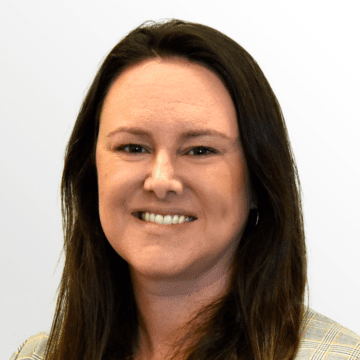
Interview with Pam
Pamela Winkler Tew‘s work is pivotal in determining how pediatric primary care supports families during the most formative years of a child’s life. A licensed social worker, she works with health systems, state agencies, and community partners to scale the innovative HealthySteps early childhood development initiative, strengthen financing pathways, and make sure the model is built to last.
What’s the core mission of your organization, and how do you carry it out?
ZERO TO THREE is a leading national early childhood nonprofit, and our mission is to ensure all babies have a strong start in life. At the HealthySteps National Office, we carry out that mission by partnering with pediatrics and adding a HealthySteps Specialist to the pediatric primary care team. That specialist is an early childhood development and behavioral health promotion and prevention expert who works with the entire team to make sure children through age 3, and their caregivers, have what they need in those early years to build the foundation for lifelong health and well-being. They fill in the gaps that pediatricians may not have the time or training to address, in areas that are core to a child’s success in school and in life.
My role is to help make HealthySteps available for more families in New Jersey, by ensuring there’s a sustainable financing model so pediatric primary care providers can support families holistically, in a financially viable way.
What accomplishment are you most proud of?
From a high level, I’m proud that more families are getting support from HealthySteps specialists as we’ve steadily grown the network in New Jersey over the past 5 years.
Personally, I’m most proud of the inclusion of a requirement for the state Medicaid program to establish an enhanced payment model for HealthySteps practices. That was the culmination of advocacy work I’ve been able to lead here in New Jersey, which lifted up the voices of families and providers who had seen the difference of HealthySteps. The language was included in the state fiscal year ’24 budget and went live this August.
Given what’s happening at the federal level with Medicaid — and the potential for losing ground in terms of child and family health — it means a lot that this reimbursement pathway will remain available to support services for families.
What do you see as the biggest challenge facing families in the first 1,000 days?
Parenting young children is difficult, no matter what. There’s no perfect roadmap, and you constantly question your decisions. Life feels increasingly complex for parents. There’s a lot of access to information, but that can lead to confusion and misinformation. Social media can make it seem like there’s a perfect way to do things, which adds even more stress.
Then you add affordability issues. Everything is getting more expensive, and wages aren’t increasing at the same rate. For many people, including me, as a mom of two kids, it feels unsustainable. Parents have an idea of the life they want to live and the family they want to build, but sometimes it’s hard to put food on the table or find affordable housing and child care.
So I think the biggest challenge is the stress of parenting combined with access to resources.
What’s the secret to a great partnership?
Relationships. For the first 2 years of the HealthySteps initiative in New Jersey, we talked to anyone and everyone who wanted to talk to us. Over time, those conversations turned into formal and informal partnerships with advocacy organizations, providers, state agencies, policymakers, and administration officials. Casting a wide net and being willing to talk with anyone has worked well for us. When you need support, those relationships are the foundation. And you can’t do this work alone. Partnership is foundational to success.
Humility is important — HealthySteps doesn’t exist in a vacuum. New Jersey has so many amazing supports for families and a real commitment to the first 1,000 days. Helping people understand the gaps HealthySteps could fill, and how it could strengthen their work and their ability to support families, was essential. We’re all working together and rowing in the same direction, not competing.
Communication is also key. Decision-makers need to understand how all the pieces fit together, because everyone has their own ask — funding, access to resources, etc. Helping people see how decisions can amplify each other, rather than cancel each other out, really matters.
I’d also add the importance of flexibility — being willing to pivot when new partners come to the table. You can make plans and work plans and deliverables, but we can’t predict the future. Remaining flexible and aligning efforts as things change is part of what makes partnerships work.
What gives you hope for families?
I think there’s increasing consensus in the field about what works. We have a lot of research and evidence and it’s clear that investing in the early years and supporting families with young children has a positive impact on children’s life trajectories and overall outcomes.
There’s still a lot of opportunity to raise awareness, and many policies are still Band-Aids instead of addressing underlying issues or preventing them in the first place. But the evidence for prevention and promotion is strong, and we have evidence-based models, like HealthySteps, for how to implement those strategies.
The opportunities to create better systems and policies feel endless. The ideas I have, the collaborations underway, the work happening to advocate for and implement new policies — all of that gives me hope. If I thought there was nothing to be done, I couldn’t do this job. But the opportunities exist, and that gives me hope.