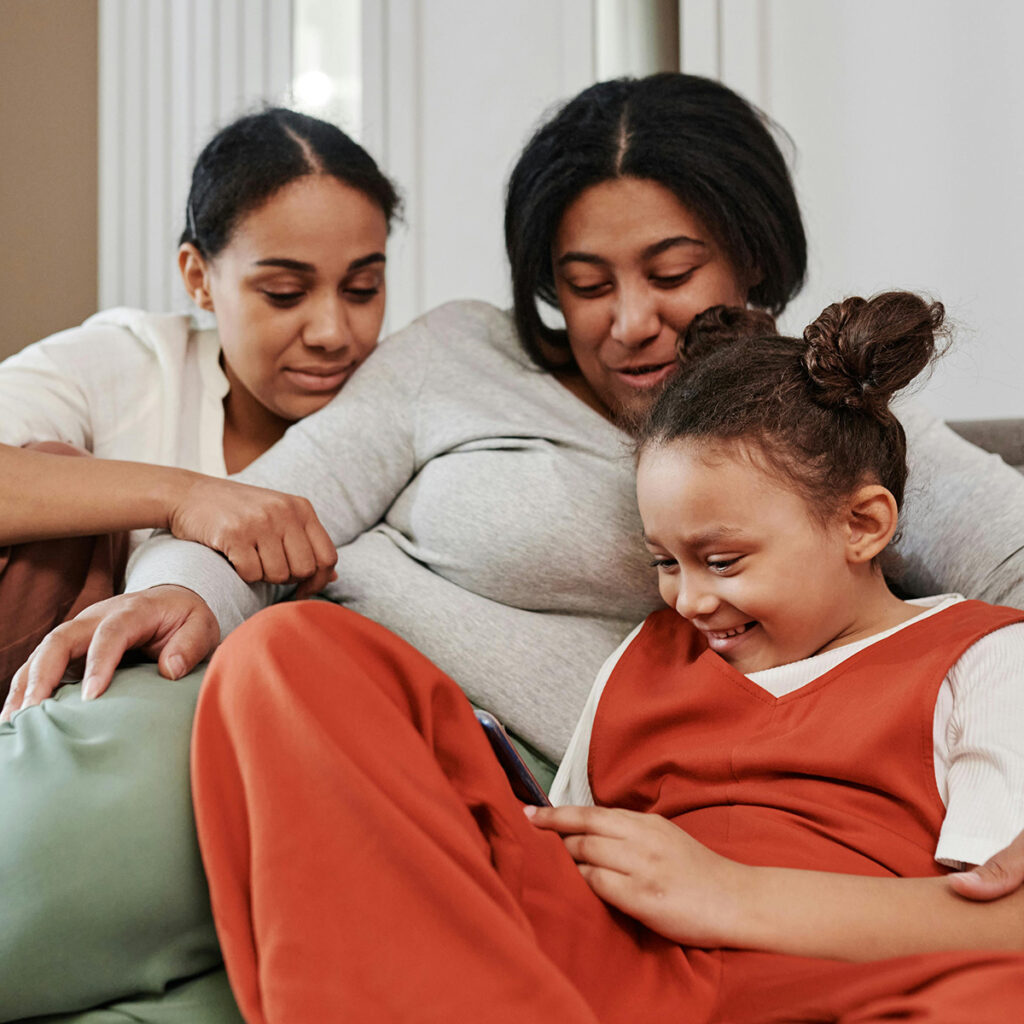
“Families are small schools and parents are children’s first teachers.”
– NJ Families Study Newsletter, Winter 2025
Unprecedented in its observational scale and the granular richness of its data, the New Jersey Families Study examines home life with remarkable breadth, intensity, and duration that can help researchers, healthcare providers, and others interested in early childhood development better understand early parent-child interactions.
Working with Princeton University’s Office of Population Research, the New Jersey Families Study seeks to deepen society’s understanding of early child development and education by creating a user-friendly early childhood ethnographic database for the global research community. The Burke Foundation provided funding to the study team.
Researchers observed and filmed the daily home lives of 21 families with children up to age five in Mercer County over two weeks, upholding strict confidentiality.
They recorded myriad parent-child interactions and observed how families support their children’s learning in the earliest and most critical years.
Data collection generated an impressive 11,500 hours of in-home video and sound recordings of families that reflect diversity in race, ethnicity, social class, family structure, and place of residence.
What makes this especially innovative is a user-friendly searchable database to house the roughly 504,000 discrete video clips and other recordings.
The project team is partnering with Princeton’s Department of Computer Science to use artificial intelligence and machine learning to help code and process the massive data set. Researchers will be able to submit queries using such filters as household demographic and socioeconomic characteristics, room views, day and time periods, which participants are in the clips, and activities and behaviors captured in the videos.
By making this rich data set widely available, New Jersey Families Study will expand the range and depth of new research on the nature, frequency, and quality of parent-child interactions.
As the study’s website reflects, “families are children’s first teachers, and home is their first school.” Now the doors to this learning are open to enable greater knowledge and understanding of early child development, parenting, and in-home learning.