
“In New Jersey, where we have a crisis in maternal mortality and racial disparities, we need to move the needle — and midwifery care is one of the best ways to make that happen.”
– Julie Blumenfeld, Clinical Assistant Professor & Program Director of the Nurse Midwifery and Dual Women’s Health/Nurse Midwifery Doctor of Nursing Practice Programs at Rutgers School of Nursing
From the Report
Midwife-led births are associated with higher rates of exclusive breastfeeding and vaginal births — and lower rates of maternal and neonatal mortality and morbidity.
Increasing the percentage of midwife-attended births from the current rate of 8.9% to 15% could save over $1 billion by 2023 nationwide.
Only 12% of midwives in the US identify as African American, Hispanic, or Latino.46
Report Summary
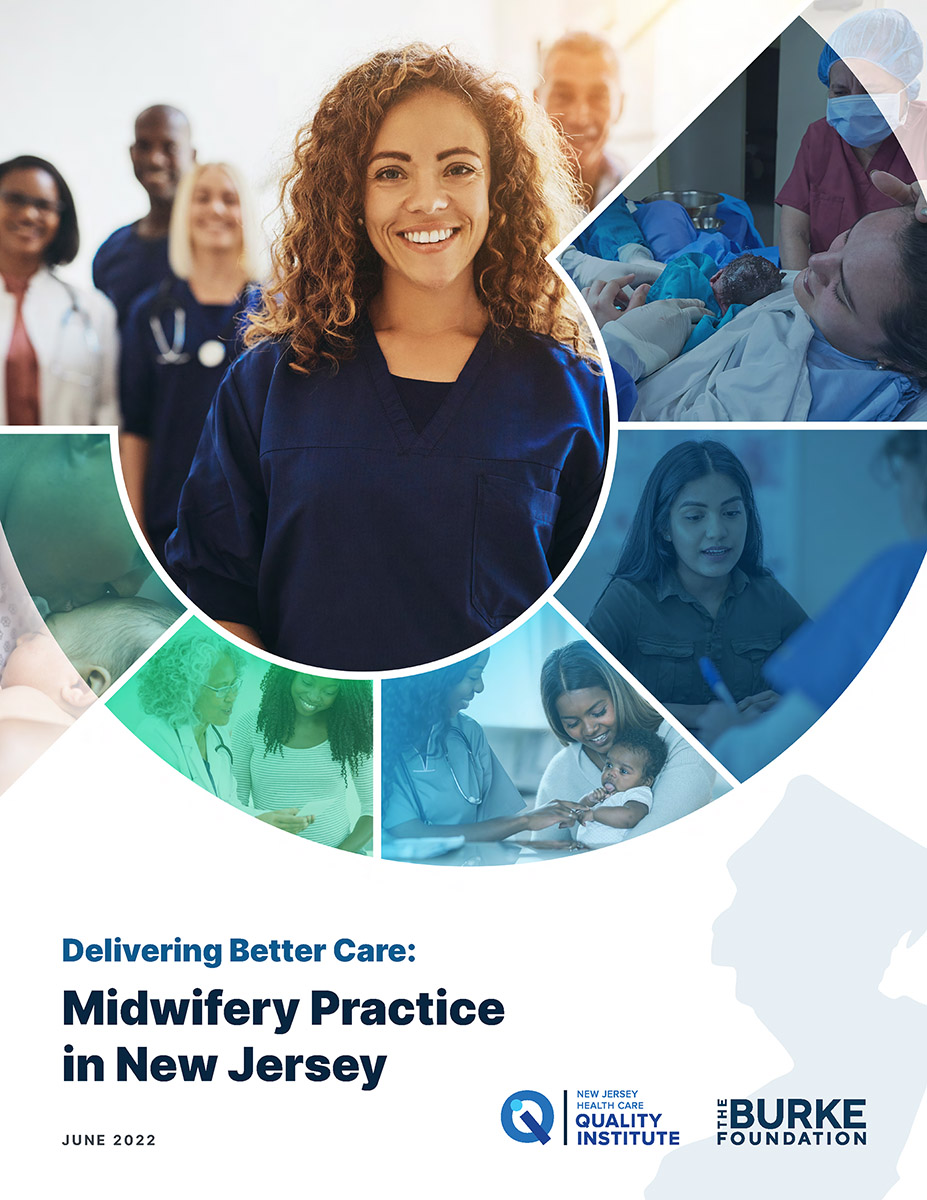
A 2022 report from the Burke Foundation in partnership with the New Jersey Health Care Quality Institute provides an in-depth look at the practice of midwifery in our state, with suggestions on how to better use these trained professionals to reduce disparities in maternal health. This report is meant as a starting point to advance the midwifery profession in New Jersey and increase public awareness of their services.
Midwives are licensed, credentialed, and independent primary healthcare providers who specialize in supporting healthy pregnant women during the perinatal period, labor, and delivery. They provide a full range of primary care for women. The midwifery model of care is associated with better maternal and infant health outcomes — such as increased rates of breastfeeding, decreased maternal mortality and morbidity rates, and fewer high-risk medical interventions. Yet, despite centuries of midwifery practice – especially in communities of color – fewer than 10% of New Jersey births in 2019 were attended by midwives.
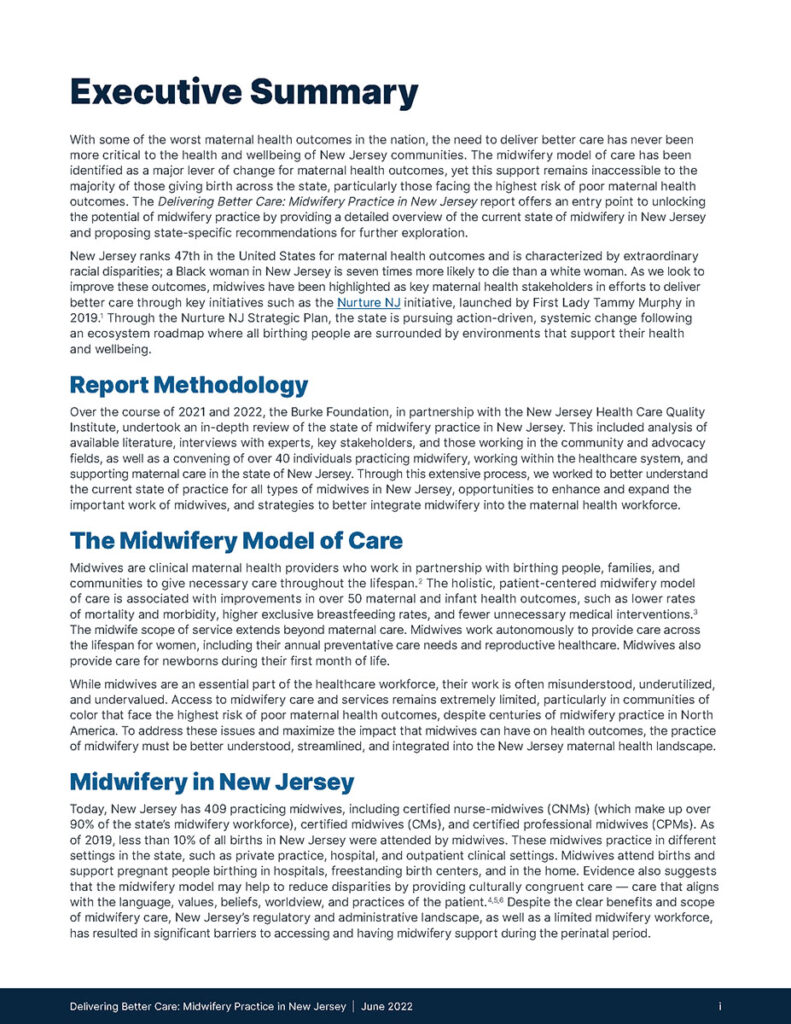
New Jersey’s racial disparities in maternal health are so severe that a Black woman in the state is seven times more likely to die of pregnancy-related complications than a white woman. The Burke Foundation joins many experts in believing that greater access to midwifery care would help close that intolerable racial gap.
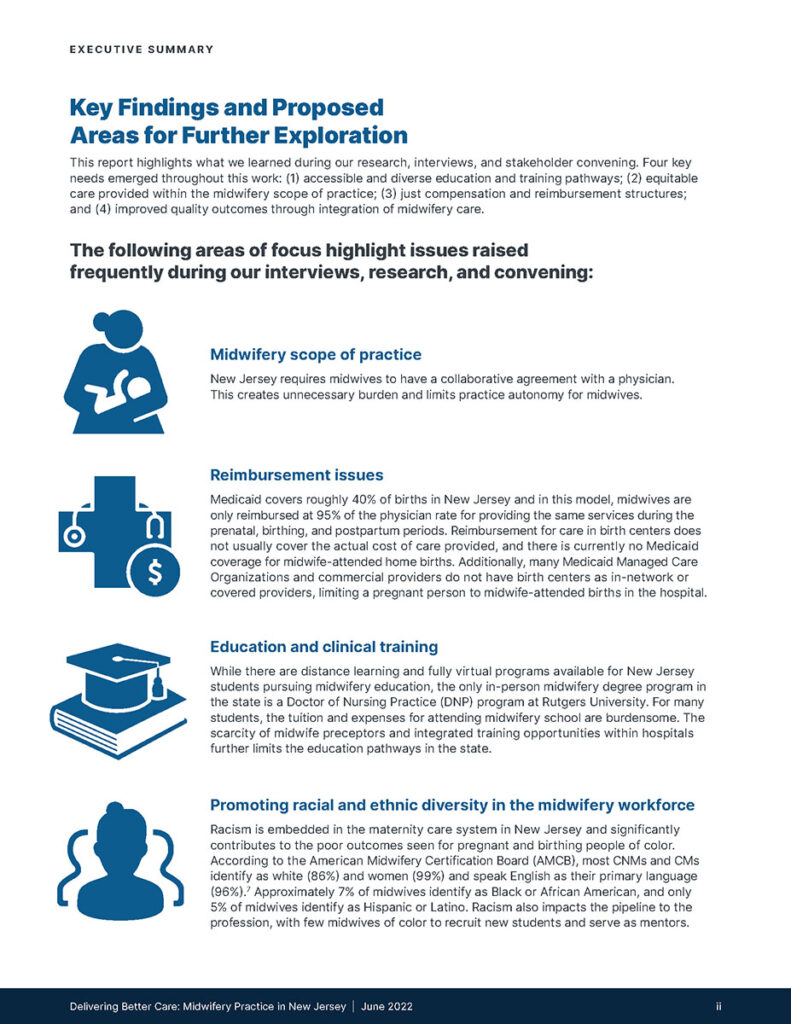
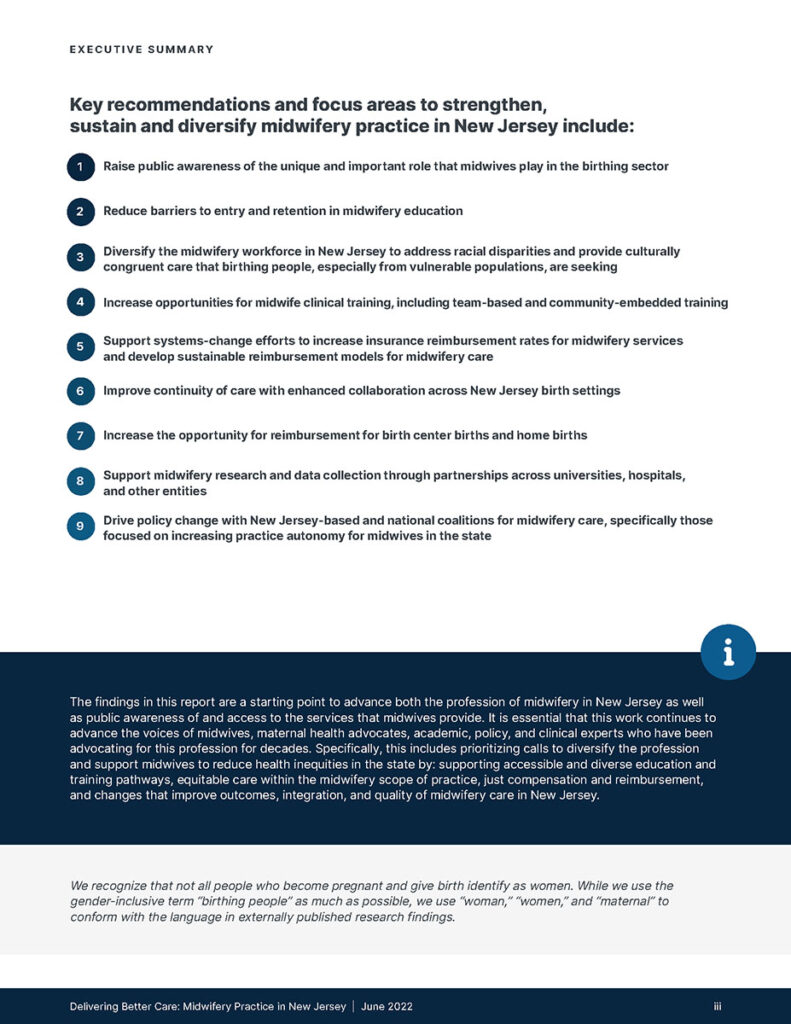
Key recommendations to strengthen midwifery practice in New Jersey
Improve public understanding of the midwifery scope of practice.
Education campaigns should inform all members of the public about the benefits of the midwifery model of care.
Increase opportunities for midwife training.
Currently the state offers only one doctoral-level program, forcing many midwifery students to look out of state. The scarcity of midwifery preceptors is a further barrier because all midwifery students must complete clinical practicum hours supervised by licensed midwives.
Diversify the midwifery workforce in New Jersey.
Strengthening this critical profession requires establishing mentoring and leadership development programs focused on aspiring midwives of color within existing programs.
Increase insurance reimbursement rates for midwifery services and develop sustainable reimbursement models for midwifery care.
The Medicaid reimbursement rate for midwifery-led care in New Jersey was recently increased, but is still only 95% of the rate physicians are paid, even though midwives provide high-quality, patient-centered care comparable to physician-led care.
“The patient-centered, culturally-sensitive care midwives provide helps reduce intolerable health disparities along racial, ethnic, income, and other lines. We are excited to be partners in producing this important report and look forward to collaborating with maternal health advocates to grow, sustain, and diversify the midwifery workforce — to make New Jersey a healthier, more equitable place to raise a family.”
– Atiya Weiss, Executive Director, The Burke Foundation